

How to Get Your AC Ready for Summer in Northern Colorado
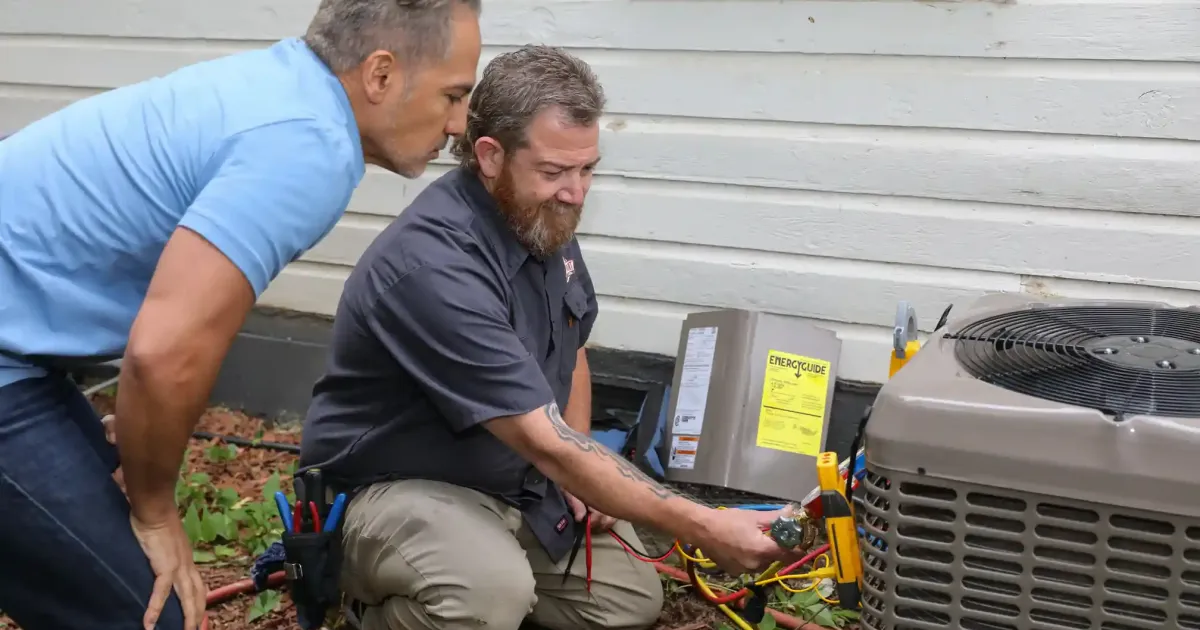
Compared to most places in the United States, Colorado’s ACs sit idle for an extended period of time. When your AC isn’t used for six or seven months, there is a significant risk that there will be a problem when you flip the switch for the first time.
Unfortunately, most homeowners don’t think about their air conditioner until it is hot out. By making sure to schedule a tune-up and complete your spring AC maintenance checklist in Fort Collins, you can be confident that your AC will be ready on the hottest days of the summer.
When Fort Collins Homeowners Typically Switch From Heat to Cooling
Thanks to our semi-arid climate, we experience unpredictable swings in temperatures. While we might sweat during an 80°F day in March, May can bring snow flurries.
Because of this, many homeowners wait until late April or May to get their ACs ready. In reality, the best time to prepare your air conditioner is earlier in the spring so that you have plenty of time to address any AC repairs or maintenance issues.
During the transition period between March and May, it is normal to need heating and cooling in the same week. By making sure your home is ready, you can avoid being caught off guard by the first warm days. This is especially important in the Windsor, Wellington, and Timnath subdivisions, where the new, builder-grade systems may require a little extra attention.
DIY Spring AC Startup Checklist: 7 Steps
By performing your AC maintenance before summer, you can avoid unexpected surprises and stay cool. To get started, we recommend performing the following spring AC maintenance checklist in Fort Collins.
- Step 1: Check and replace the air filter. From airflow issues to frozen ACs, many common AC problems can be avoided by replacing your filter regularly. If you haven’t changed it since last fall, now is your chance.
- Step 2: Inspect the outdoor condenser unit. There should be no snow, debris, or leaves within 2 feet of your outdoor unit. As a part of your spring maintenance, remember to trim all of the vegetation back as well.
- Step 3: Check the condensate drain line. Clogged condensate drain lines can lead to water damage. To see if your line has any clogs, try pouring a cup of water down it.
- Step 4: Switch the thermostat to cooling mode. Before you need your AC, you should do a test run to ensure it is ready for warmer weather. Set the thermostat to cooling mode. Then, select a temperature that is a few degrees lower than your room temperature. If the air conditioner is functioning properly, you should immediately hear the outdoor unit start up.
- Step 5: Listen for any unusual sounds. Air conditioners rarely break down without some prior warning. Unusual noises are one of the most common signs that a repair is needed. Any buzzing, clicking, or grinding sounds should immediately be checked out by our professional heating, ventilation, and air conditioning (HVAC) technicians.
- Step 6: Run it for 15 minutes and check the airflow. During your test run, you should leave the AC on for 15 minutes. This allows you to check the vents for cool airflow. Each vent should produce a similar amount of air. If the airflow is uneven, you may have ductwork problems that need to be addressed.
- Step 7: Verify the circuit breaker is functional. Often, homeowners will shut off the AC at the circuit breaker when they get it ready for winter. If your AC isn’t switching on, try checking the breaker panel before you assume that the unit is malfunctioning.
Signs Your AC Needs Professional Attention After Winter
If your AC is not working after winter in Colorado, there could be a few different problems with it. To avoid unexpected breakdowns during peak heat, we recommend scheduling a professional tune-up if you notice any of the following signs.
- Warm Air: When an air conditioner runs but blows warm air, it may be due to a compressor problem or low refrigerant levels. Additionally, this problem can be caused by a malfunctioning thermostat or having the AC in fan mode only.
- Inability To Turn On: To start up, the AC needs an electrical signal to start. If the capacitor, electrical connections, or contactor have failed, the AC won’t turn on.
- Unusual Odors: Sometimes, you may notice a musty odor near your drain pan or ductwork. These scents mean that there is likely mold in your system. If you notice a burning odor, one of the electrical components is having issues. Electrical malfunctions can be a fire and electrical shock risk, so you should schedule an AC appointment right away.
- Short Cycling: When units cycle on and off faster than normal, it is known as short cycling. This symptom can occur if your system is too large for your home, you have a dirty filter, or a component is failing. Because of the added wear and energy consumption involved, you should get the underlying problem diagnosed and repaired before summer.
- Pooling Water: If water starts to pool around your outdoor unit, it means that you likely have a clogged condensate drain line. Fortunately, this issue can be easily fixed by flushing the drain line and removing the clog.
What a Professional Spring AC Tune-Up Includes
When our team arrives for your HVAC spring maintenance in Northern Colorado, you can expect the entire process to take around one to two hours. During the AC tune-up, we will handle the following tasks.
- We will start by checking the refrigerant levels and adjusting them as needed.
- The technician will test your electrical connections. If any are loose, the technician will tighten them.
- To improve your efficiency and airflow, we will clean your evaporator and condenser coils.
- Our technician will conduct an airflow measurement for your supply and return vents so that they can spot any telltale signs of an airflow-related issue.
- We will calibrate the thermostat and make sure your programming is set up properly.
- To prevent mold and safety shutdowns, the technician will flush the condensate drain line and check for clogs.
- Our team will verify that your safety controls are working properly and that your system is safe to use.
You can improve the energy efficiency of your unit in two main ways. Timely maintenance and consistent tune-ups can help you maximize the efficiency of your existing unit. If you get a replacement, you can achieve better efficiency by getting a higher Seasonal Energy Efficiency Ratio (SEER2). HVAC manufacturers use SEER2 to show how efficient an AC is at converting electricity into cooling output. Installing a unit with a higher SEER2 directly translates into lower energy bills.
Whether you want an AC replacement or a springtime tune-up, Balance Point offers the upfront pricing and same-day services you need to get started. Reach out today to schedule an AC maintenance appointment in your area.
Common Spring AC Issues Unique to Northern Colorado
As you decide when to turn on an AC in spring in Colorado, it is important to consider our unique elevation, climate, storms, and temperature swings. Because we are located at about 5,000 feet in elevation, there is more intense UV degradation for outdoor unit components. This necessitates more frequent maintenance and repairs.
Our dry climate also impacts HVAC equipment. Due to the low humidity, more dust accumulates in our filters and ductwork. These temperature swings can be especially challenging for homes in Fossil Creek, Ridgen Farm, and the Harmony Road corridor because of the unique ductwork configurations involved.
Major temperature variations and hail play a role in our area’s unique AC issues. Our drastic temperature swings can stress HVAC systems, with temperatures going from 80°F in the day to 30°F overnight. Meanwhile, hail damage during summer storms can dent condenser fins and cause hidden damage to the outdoor unit.
Smart Thermostat Tips for the Heating-to-Cooling Transition
Another key part of your spring AC maintenance checklist in Fort Collins is to adjust your thermostat. Because of how variable the temperature can be during spring, we recommend using the auto mode. This allows the thermostat to easily switch between heating and cooling without any intervention on your part.
To avoid spending an excessive amount on your energy costs, you should practice moderation in your settings. The deadband is the gap between your heating and cooling set points. If the deadband is too wide, you may feel uncomfortable. When it is too narrow, your HVAC system will cycle between heating and cooling too often. In most cases, the best deadband is around 3°F to 5°F.
If your current thermostat doesn’t offer auto mode or is older, this might be a good opportunity to think about an upgrade. Programmable and smart thermostat installations can be scheduled with different set points for when you’re home, away, and asleep, so you can make adjustments to match Colorado’s wide daily temperature swings.
Interested in learning more about smart thermostat installations? Reach out to Balance Point to learn more.
Frequently Asked Questions
Is it too early to turn on my AC in spring?
Your AC doesn’t know if it is December or June, so you should do what feels comfortable for you. By learning how to start your AC after winter and following our checklist, you can make sure your cooling system is ready for summer.
How long should I wait after turning on the AC to know if it’s working?
Once you switch your AC on, we recommend waiting 15 to 20 minutes to see if it will reach the appropriate temperature. If it does not reach your set temperature by this point, then you should reach out to our HVAC technicians for a diagnostic appointment.
Should I get a tune-up even if my AC seems fine?
Yes, you should always schedule a spring AC tune-up in Fort Collins. Even though your AC may seem fine, there may be minor wear, dirt buildup, or components that are starting to fail. We can catch these minor issues during the appointment so that you don’t have to call for emergency repairs in the middle of summer.
How often should I schedule AC maintenance?
We recommend scheduling your AC tune-up each spring before the cooling system begins. By doing so, you can ensure your system is ready when you need it the most.
Get Your AC Ready in Time for Summer
By completing your spring AC maintenance checklist in Fort Collins, you can make sure your home is comfortable all summer long. To help, we offer a membership plan that features complimentary tune-ups, special discounts, and priority scheduling.
Ready to beat the summer rush? Schedule your AC tune-up while our calendar is still open. Call us today.
Service Request
"*" indicates required fields