5 / 5 based on 800+ 5 Star Reviews
We're hiring! Apply online today.

How Can I Make My Furnace Last Longer?

The average furnace lasts between 10 and 15 years. But did you know you can take steps to make it last longer? There is no shortcut or hack to increase your furnace’s longevity.

In reality, the key is treating your Fort Collins, CO system with care and respect. With just a small amount of time and energy, you can ensure your furnace will live well beyond its warranty. From our team here at Balance Point Heating, Cooling & Plumbing, here are four things you should do to make your furnace last longer:

1. Change Your Filter Regularly

This is one of the easiest and most beneficial things you can do for your heating system. Check the manufacturer’s guidelines to see how frequently you should replace your filter.

When filters get clogged with dust and debris, it causes all sorts of problems with your furnace. The airflow becomes restricted, causing the furnace components to wear down more quickly.

2. Schedule Maintenance at Least Once a Year

You should see one of our heatingventilation, and air conditioning (HVAC) professionals for maintenance at least once a year. Your heating equipment might have issues you can’t yet see.

Fortunately, a trained eye can spot them. Also, our technicians will clean any excess debris or mold from your equipment. This protects your furnace, as well as your Colorado home’s air quality.

3. Regulate Your Home’s Humidity

Protecting your furnace from excess moisture is an easy step to forget. Humid temperatures can cause your unit’s parts to rust quickly. This can lead to breakdowns. It can also lead to a cracked heat exchanger, which is expensive to replace and potentially deadly. Additionally, according to the Illinois Department of Public Health, excess humidity can cause a host of other problems in your home.

4. Limit Your Use

In automotive terms, the amount of hours your furnace spends running is comparable to a car’s mileage. If you can run your heating system less frequently, you’ll get more use out of it in the long run.

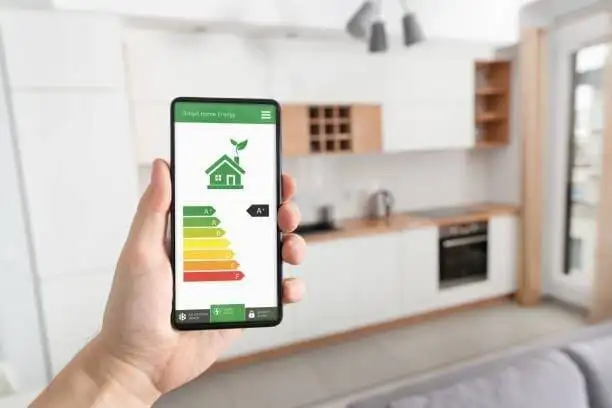
A convenient way to do this is by upgrading your thermostat to either a programmable or Wi-Fi/smart thermostat. Programmable thermostats can automatically turn down your heat during hours when no one is home. Wi-Fi thermostats allow you to adjust temperatures on your smartphone or computer/laptop when you’re home or away. You can also monitor your weekly energy usage, so you can consider ways to cut down.

Contact Balance Point Heating & Air Conditioning for All Your Furnace Needs

Balance Point Heating, Cooling & Plumbing is here to help you in Loveland, Colorado, and our surrounding areas to preserve your furnace’s condition. Call us today at 970-235-2428 or request service online to schedule service with one of our highly trained and experienced professionals.

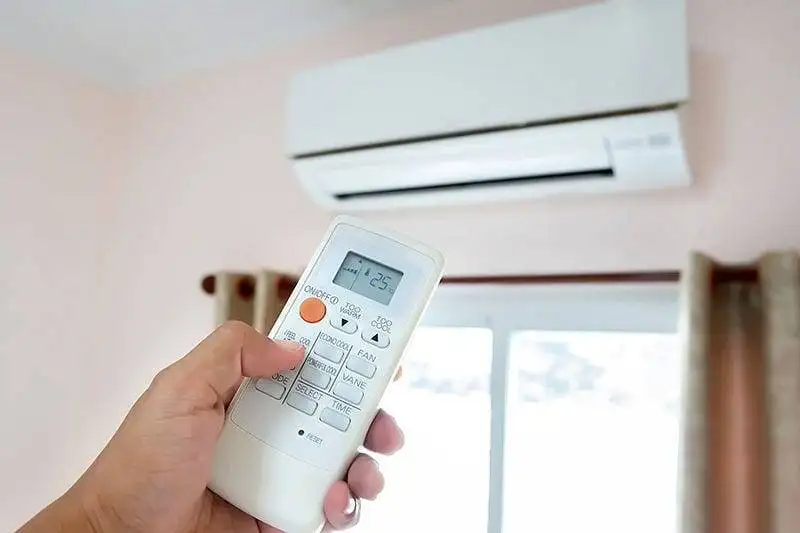
Ductless mini-split set in the right temperature in a Colorado home.

Ductless Mini Split: Setting the Right Temperature

Ductless mini-split air conditioners are a popular option in Fort Collins because of the customized, high-level comfort they provide. They use the same technology as heat pumps, but you can install them in individual rooms. Because of this, ductless mini-split ACs can provide a high level of individualized comfort.

With dry air, sunny days, and cool nights, your thermostat settings may fluctuate significantly. When dealing with ductless mini-split air conditioners, you need to be mindful of weather changes throughout the day as well as each family member’s unique temperature preferences. 

To help you stay comfortable this year, we’ve compiled a guide to some of the best thermostat modes, energy-saving tips, and practical considerations.

Mini-Split Basics: How Temperature, Modes & Sensors Work 

With an inverter compressor, sensors are paired with the compressor to modulate heating and cooling. After the sensors relay the temperature inside your home, the compressor changes the voltage and frequency so that the level of cooling and heating changes. Rather than changing the temperature quickly and shutting off, the unit stays on for longer. As a result, your home uses less energy.

Thanks to how ductless mini-split AC units work, you can take advantage of remote thermostat readings instead of head unit sensors. Many traditional ACs use head unit sensors, so only one sensor is used to determine the temperature in your whole home. Ductless units can provide a more accurate level of comfort because different sensors report on the temperature in individual zones. 

Plus, mini-split humidity control settings can ensure different rooms have the right humidity level. You can change mini-split dry mode vs. cool mode on humid days to ensure a comfortable, cool home.

Summer Settings in Fort Collins: Day, Night, and Away 

When it comes to the ideal thermostat setting for ductless AC, it really depends on the time of year. During the daytime in the summer, most experts recommend setting your thermostat to 78°F so that you spend less on energy costs. 

Mini-split temperature settings for sleeping are usually lower, as sleep quality decreases at higher temperatures. In general,  temperatures between 65°F and 68°F are the best for rejuvenating sleep. If you’re away from home, the best energy-saving temperature for mini-splits is 88°F or higher.

To maximize your ductless mini-splits AC’s cooling efficacy, don’t forget to take advantage of dry mode. During monsoon-like days, the dry mode helps to reduce the stickiness in the air without over-cooling your home.

Winter Settings

When comparing summer vs. winter mini split settings, it’s important to keep individual preferences in mind. You don’t want to let the air get too cold because the system may struggle to modulate efficiently. Instead, keep your thermostat settings at 62°F when you’re away or asleep. During the day, around 68°F is a good temperature. 

With the mini-split heat pump temperature range, slight changes can save you a significant amount of money. By lowering your indoor temperature by just 7°F to 10°F for eight hours, you can save up to 10% on your energy bills. 

During winter, it’s generally more effective to use the auto fan setting than the fixed fan setting. Auto fan means your fan only turns on as needed, so it saves money on energy costs. 

Even though it gets quite cold during the winter in Fort Collins, your ductless mini-split heat pump can still function effectively if it is cold-climate rated. These units are designed with defrost cycles, which allow the unit to defrost and stay functional in cold weather.

Sleep Optimization: Quiet, Even, and Just-Right 

When it comes to the mini-split temperature settings for sleeping, anywhere between 62°F and 68°F is appropriate, depending on the season. You can also use the sleep mode for better energy efficiency and automatic temperature adjustments at night. With the quiet mode, your ductless mini-split air conditioner will function at a quieter noise level until morning. 

To avoid a draft, make sure the airflow isn’t pointed directly at you. You may also want to set your thermostat to a higher temperature.

Humidity & Mode Selection 

When it comes to mini-split humidity control settings, you should set your relative humidity to between 30% and 50% to ensure your family’s comfort. During humid, summertime storms, you can use dry mode to remove humidity from the air. Besides preventing mold growth, a lower humidity helps your home feel cool at a higher temperature.

Zoning Tips To Prevent Hot/Cold Spots 

For help preventing hot/cold spots with mini splits, it’s a good idea to set up multiple indoor heads. This is especially important in tricky rooms, such as sunrooms and basements. 

To ensure balance and avoid pressure-related issues, keep doors open and try to coordinate the same temperature setpoint in different zones. You may also need to experiment with different fan speeds and airflow directions to make sure every room reaches the same temperature.

Energy-Saving Playbook for Fort Collins Homes 

Besides finding the best mini-split heat pump temperature range, you can save energy by adopting a few other tips. 

  • Set It and Leave It: With an inverter system, set it to the right temperature and leave it alone. This helps you avoid major swings.
  • Seasonal Setpoint Ranges: For the best energy-saving temperature for mini-splits, pick a temperature range. This keeps your unit from turning on all the time and can save on energy costs.
  • Smart Thermostats: Investing in smart thermostats can help you maximize savings. Over time, the thermostat will learn your family’s temperature preferences. 
  • Clean Filters: For the maximum energy efficiency, make sure to clean and replace your filters every 30 to 90 days. 

When Your Settings Aren’t Working: Quick Checks 

If one of your ductless mini-split air conditioners isn’t working, there are a few quick checks you can do to troubleshoot the problem. 

    • Change or replace the filter.
    • Make sure it is set to the correct mode and temperature.
  • See if the sensors are blocked.
  • Face the fan’s louvers in the correct direction to avoid drafts and uneven cooling.

For capacity issues, low refrigerant levels, and advanced controls, you should reach out to one of our professional HVAC technicians for ductless mini-split inspections and repairs.

Choose Your Home’s Temperature With Care in Fort Collins

From discovering the best temperature for mini-split units to performing routine maintenance, a few simple steps can ensure your family stays comfortable this year. With the help of Balance Point Heating, Cooling & Plumbing, you can get help maintaining ductless mini-split air conditioners.

Find out more about our ductless mini-split AC services by calling our HVAC experts today!

Seasonal Maintenance Tips for Your Whole-House Humidifier

In Fort Collins, winters are fairly dry. Along the Front Range, the shoulder seasons also have variable weather. In order to keep your home healthy and comfortable for all of its occupants, you need to invest in a whole-house humidifier. Besides helping you breathe easier, a whole-home humidifier can also protect your home’s wood finishes.

For more about these HVAC devices and basic maintenance, read on.

Whole-House Humidifier Basics: What You Have & How It Works

There are a few popular types of home humidifiers. With proper central humidifier care, you can ensure your humidifier is fully functional throughout the year.

  • Bypass Humidifiers: This kind of home humidifier system passively uses air from your furnace. The air flows over an evaporator panel to increase its humidity level.
  • Fan-Powered Humidifiers: With this option, the humidifier performs the same basic action, but it uses its own fan to push air over the panel.
  • Steam Systems: Meanwhile, a steam system involves boiling water with the help of electrodes or resistive heating in order to create steam vapor.

All of these systems are triggered to turn on when your humidity level drops below a setpoint.

Seasonal Checklist at a Glance: Spring, Summer, Fall, and Winter 

To keep your whole-house humidifier functioning at its best, you have to use whole-house humidifier maintenance consistently. The following HVAC humidifier maintenance should be performed in each season. In every season, you should double-check the water quality. Additionally, make sure to always change the filter or evaporator pad.

Spring: Clean, Inspect, and Power Down

In spring, turn off the water supply. Turn your humidistat off or to your lowest setting. Then, perform the following whole-home humidifier maintenance steps.

  • Replace or clean your media pad in the water panel.
  • Flush the drain line. 
  • Use scale removal to clean the distribution tray.

Hard water is common along the Front Range. Because of this, you should check for mineral buildup as a part of your central humidifier care. You may also want to consider getting an inline filter or a water softener.

Summer: Standby Mode & Mold Prevention

As a part of your furnace humidifier upkeep in the summer, make sure that the unit’s power is off when the air conditioner is running. If you have a bypass unit, it should be set to SUMMER/CLOSED. Then, perform the following maintenance steps for your home humidifier system.

  • Make sure the drain is clear.
  • Keep the cabinet dry. 
  • Check each month to make sure there is no standing water.

Fall: Reactivation & Calibration 

Before fall arrives, there are a few HVAC humidifier maintenance steps you need to take care of. 

  • As a part of your whole-house humidifier maintenance, reopen the water supply.
  • If the media pad wasn’t replaced during your springtime maintenance, it’s time to get a new one.
  • Ensure the valve and solenoid work.
  • Inspect your wiring, fan, and float/safety controls to make sure they’re in working order.
  • Set your relative humidity (RH) to 35% to 40%. Adjust as needed so that your windows don’t develop condensation.
  • Run a test cycle with your furnace. Make sure that water is evenly distributed on your steam canister or pad.

Winter: In-Season Care & Dialing RH 

During the winter, your whole-home humidifier will be used all of the time. For the best results, remember to tweak your RH when the outdoor temperature swings. It should be lower during the coldest days so that you don’t develop ice and condensation on your windows. 

As a part of your furnace humidifier upkeep, remember to perform the following whole-home humidifier maintenance.

  • Inspect the pad each month. Change it as needed.
  • Descale your tray and distributor.
  • Ensure the drain remains clear.

Sometimes, humidifiers can malfunction. If you notice signs of a leak, gurgling noises, or frequent canister faults (steam), you should call Balance Point right away to schedule a professional inspection and repairs. You may also need repairs if your home’s humidity level is rising at a slower rate than normal

Water Quality & Mineral Management

Most homes in this part of Colorado have hard water. Unfortunately, hard water can lead to faster scale buildup. Over time, this can shorten the lifespan of the pad or canister. 

To remedy this problem, it’s a good idea to perform seasonal descaling. Upgraded media, inline filters, and water softeners can all help you avoid scale damage. If you notice crumbly media or any white dust near your vents, reach out to our team right away to learn about all of the water softener and other tools that can prevent additional damage.

Smart Controls, Sensors & Energy Tips

If you want to keep your home comfortable throughout the year, adopt the following essential tips. 

  • Outdoor temperature sensors can help your RH automatically adjust to changes in temperature so that you can avoid condensation on your windows. 
  • Smart thermostats and automated controls can learn your comfort preferences, optimize your energy usage, and ensure a more comfortable indoor environment. Plus, smart thermostats allow you to set it and forget it.
  • Fix air leaks so that your furnace and humidifier don’t have to work as hard. 
  • Change your furnace filter regularly to stabilize the humidity levels and achieve the best air quality possible.

Troubleshooting Quick Guide

If you experience problems with your humidifier, use the following troubleshooting tips to find a quick solution.

  • No Humidity Change: Start by checking the water valve and solenoid. Make sure the pad orientation is correct and the damper is open. Additionally, verify that the thermostat is set correctly.
  • Water on Floor: Inspect the drain hose for signs of a leak. You should also check the fittings and shut-off valve.
  • Odd Odors: Try replacing the pad and sanitizing the cabinet. You may also need to look for airflow issues.

When to Call Balance Point Heating, Cooling & Plumbing

If something is wrong with your whole-home humidifier and basic troubleshooting doesn’t work, give us a call. We can help to make sure your whole-house humidifier achieves the peak performance level possible, schedule an annual service maintenance for cleaning, calibration, and safety checks. During the appointment, we’ll inspect your system for potential problems and recommend the best repair options.

Call Balance Point Heating, Cooling & Plumbing today to schedule your next HVAC appointment in Fort Collins.